
How to Choose the Best Offer When Selling Your Home
Receiving multiple offers is exciting, but deciding which one to accept isn't always straightforward. The highest offer isn't necessarily the strongest offer.
Understanding what makes an offer reliable can help sellers avoid delays, cancellations, and unnecessary stress.
Beyond the Purchase Price
Price is important, but it's only one piece of the puzzle.
When evaluating offers, sellers should review:
Financing strength
Down payment amount
Contingencies
Requested concessions
Proposed closing timeline
Buyer's overall qualifications
A slightly lower offer may ultimately provide a smoother and more predictable transaction.
Understanding Common Contingencies - Contingencies are conditions that must be satisfied before the transaction can move forward.
Inspection Contingency - Allows the buyer to investigate the property's condition and potentially request repairs.
Appraisal Contingency - Protects the buyer if the home's appraised value comes in below the purchase price.
Loan Contingency - Allows the buyer to cancel if financing cannot be secured.
Sale of Current Home Contingency - Requires the buyer to sell another property before completing the purchase.
The more contingencies involved, the greater the potential for delays or cancellation.
Signs of a Strong Offer
A strong offer often includes:
✓ Solid lender pre-approval
✓ Significant earnest money deposit
✓ Reasonable contingency periods
✓ Financial reserves
✓ Flexible closing terms
✓ Demonstrated ability to perform
These factors can provide confidence that the transaction will reach closing successfully.
Reliability Often Wins
Imagine choosing between:
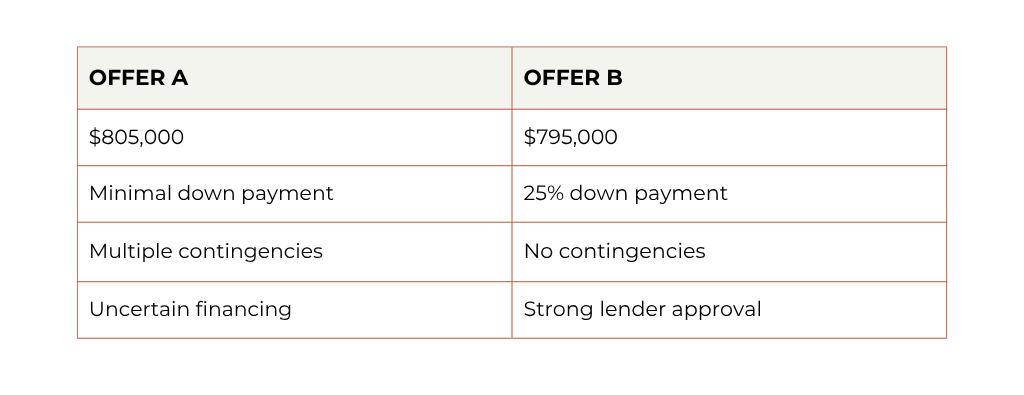
Many experienced sellers would seriously consider Offer B despite the lower price because it presents fewer risks.
A useful offer comparison starts with a realistic view of value. Read our pricing strategies before weighing price and terms. For an inherited home, our market value vs. cash offer article compares the two sale paths.
Finding the Right Balance
Every seller's priorities are different. Some need a quick closing. Others want maximum proceeds. Some need flexibility for a move or replacement purchase.
The best offer is usually the one that balances price, reliability, and likelihood of closing, not simply the largest number on paper. That’s why it’s important to have an experienced Real Estate professional on your team who can guide you in the pros and cons of each offer you receive.
Need help comparing the offers on your home? Call The Kaur Gray Group at 951-543-4592 to review price, terms and your priorities.